


Open Memory arises from the need not to monumentalize the past, but to make it truly available to the present,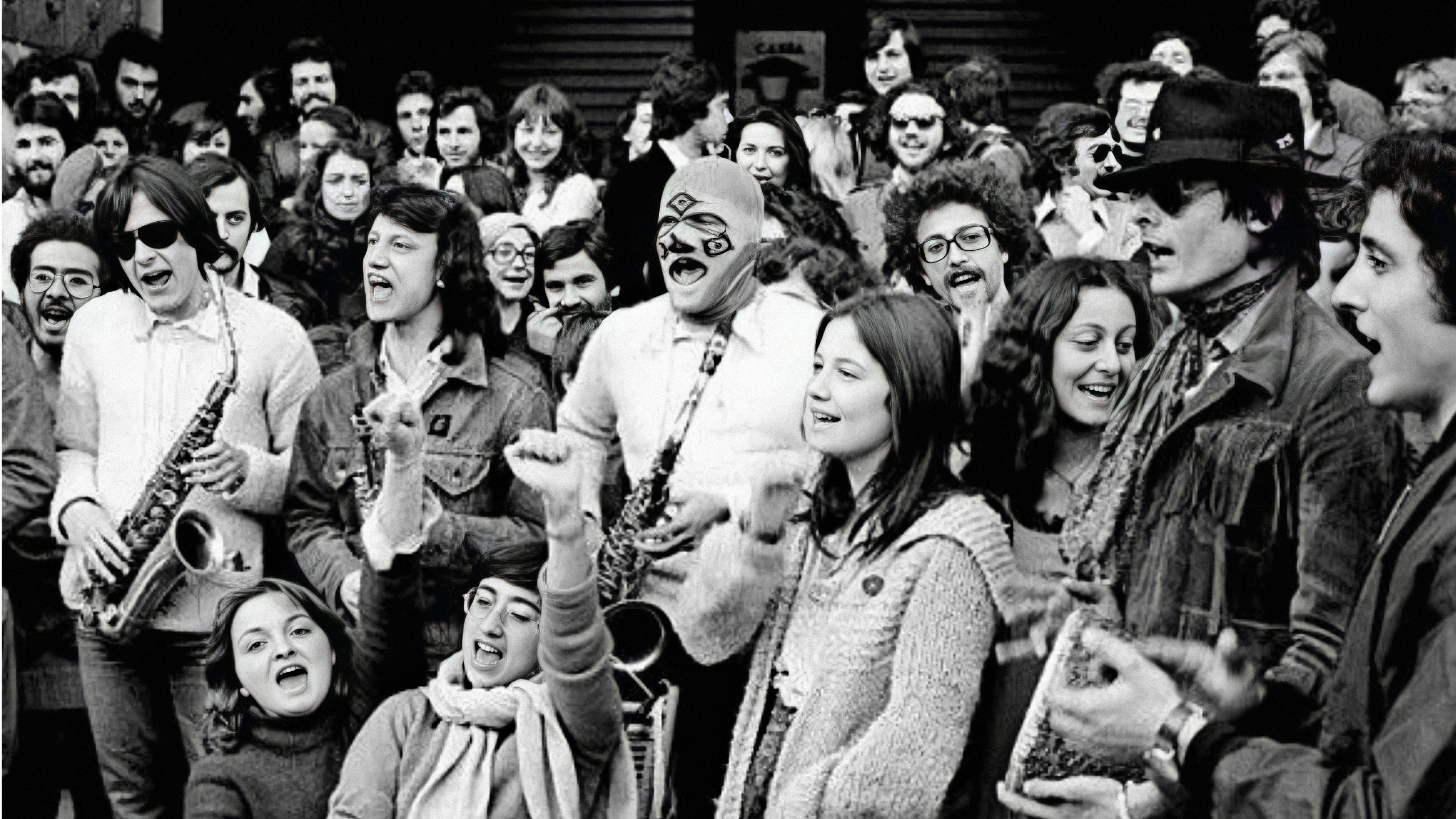
precisely because memory and history are constituent elements of our present and not just attributes of epic and genealogical knowledge.
A research centre is first and foremost a place for transmitting knowledge, for reworking and updating the past, but above all for analysing and directing the present.
Not an archive for its own sake, locked away on shelves, but a process of preserving materials that is always open and fluid, which has the ambition to not stop at the city context, but to extend to the entire Northeast of Italy, to the events and cycles of struggles and movements that have characterized the entire macro-area in which our political, social, cultural and communicative journey continues.
The Open Memory research centre is a place for study, research, discussion and analysis.
A physical place composed of an archive, collections of videos, photos, audio files, a newspaper library and a small book library; it is also a place that develops on the web and in multimedia productions.
The past that is intertwined with the present and lays the foundations for the future.
We want the process of study and analysis to be the result of collective work, rather than a task delegated to specialists only.
We want to recount the past, through the use of tools like podcasts, storytelling, radio broadcasts, 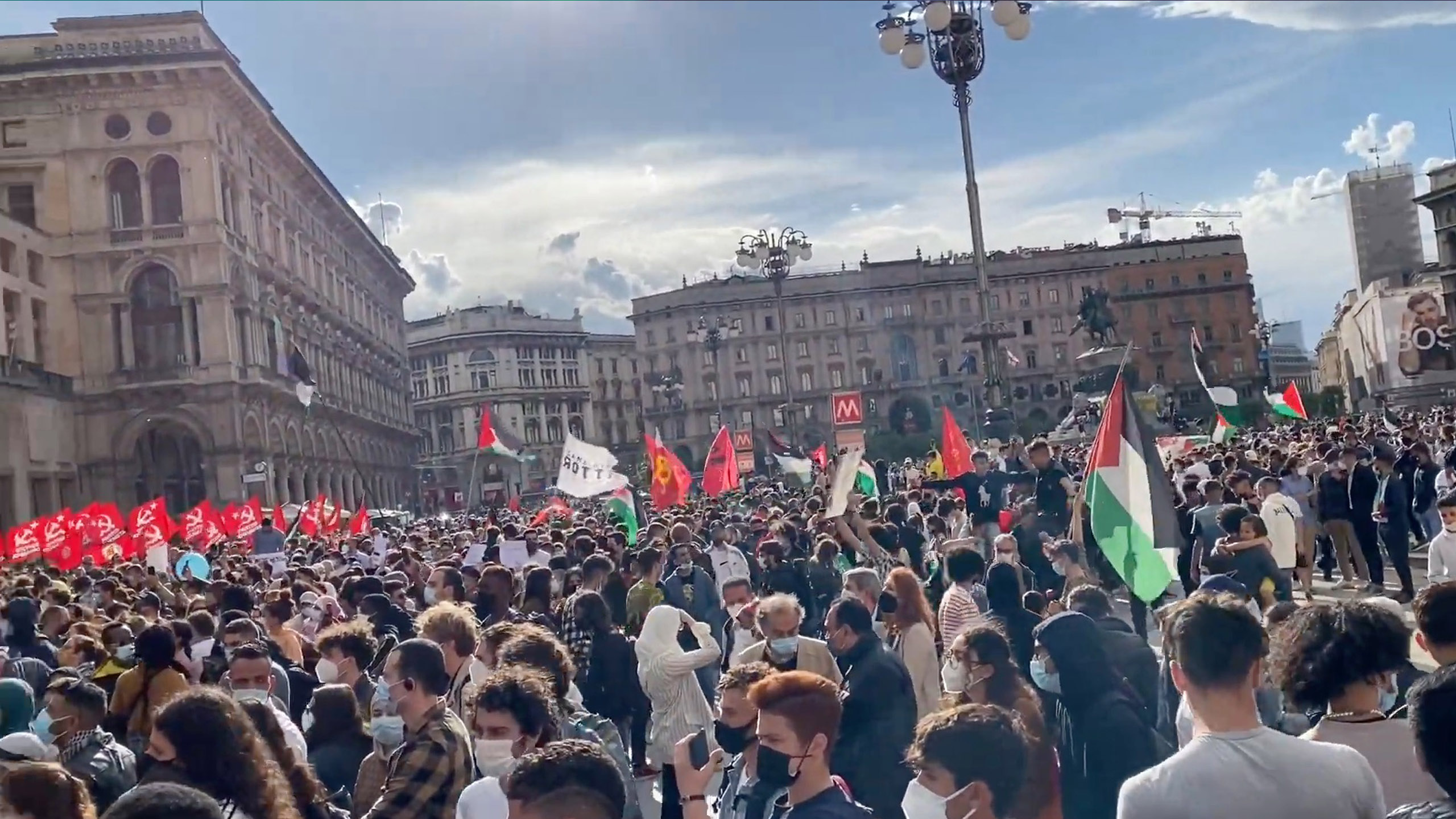 video-talks and also the more conventional conferences and debates. We want the new generations, thanks to workshops and training activities, to be aware of their history to live the present coherently and cultivate and plan together a better today and a better tomorrow.
Marc Bloch in his unfinished work entitled “The Historian’s Craft” – published after his killing at the hands of the Nazis in 1944 – devotes extensive reflection to the function of history in society. A reflection that analyzes “the past in function of the present and the present in function of the past” and assigns to “collective memory” a key role in resolving “present problems”, tensions and tendencies experienced in contemporary world.
From this perspective, past and present are not just two points located on the great timeline, but they have a dialectical relationship, they stimulate each other in the continuous becoming of history and of the conflicts that stratify within it.
This is even more true in the analysis of social and political movements that have followed one another in the last half century, from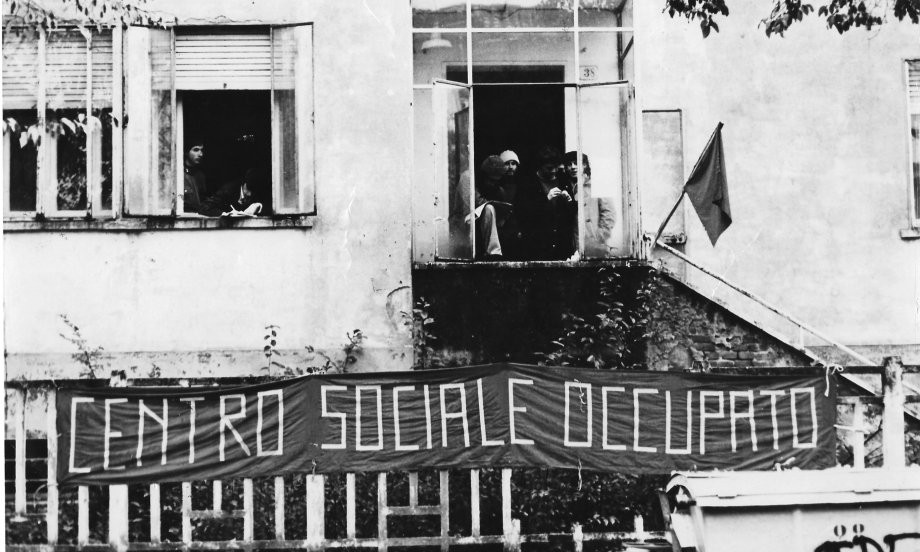 the break with the communist “tradition” that occurred in the 1960s to the birth of the concept of “class autonomy”, from the crisis of industrial capitalism to the conflict between capital, the living beings and nature that pervades all of contemporary.
In Northeast Italy, where some processes occurred in an early and paradigmatic form compared to other territories, persistence and discontinuities alternate incessantly starting from the “long ’68”. Movements, cycles of struggle, theoretical elaborations, organizational spaces, political communication tools have settled without leaving gaps, constantly feeding that “méthode critique” which, again quoting Bloch, is the only lesson that documents and testimonies from the past can give to the present.
Radio Sherwood represents a privileged point of view in this regard, capable of combining direct observation, narration, activation and social movement over time. Since its founding in 1976, the radio station has become a voice of struggles and has woven its paths with those of political movements in Padua, in Veneto and in the rest of the italian peninsula.
In 1977, the year when large-scale conflict exploded, the newborn radio broadcaster became the voice of the Paduan autonomous area, completely revolutionizing the communication of political groups linked to that area, and also becoming part of the broader and more innovative context of the national media system, following the “boom” of free radio stations. In 1979 the “April 7th trial” and its aftermath severely hit Paduan Autonomy and Radio Sherwood as well, which had its editorial staff decimated by arrests.
The following years, which mainstream narrative has always erroneously labeled as “years of disengagement“, are instead a phase of reconstruction and experimentation. Right around Radio Sherwood, old and new figures  converge, new cycles of struggles are organized, from those against nuclear power to the students’ struggles of the 1980s and 1990s (such as the ’85 movement and the so called Pantera), from the occupations of social centers throughout Veneto to the birth of the no-global movement.
Radio Sherwood still continues to be a megaphone and an incubator of movements until the “web revolution”, the creation of movement publications such as Globalproject, Melting Pot, the Sherwood Festival, the decision to abandon radio frequencies and begin the webradio adventure, with streaming broadcasts, podcasts, and the implementation of video outputs.
For further information, please write to : archivio@sherwood.it