The Fire War
A train bound for Hungary is raising concerns about the weapons and soldiers on board, prompting questions about its destination and purpose.
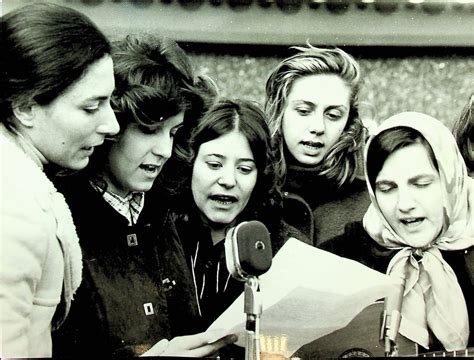
The demonstration brings together people of all ages and political beliefs.
A train bound for Hungary is raising concerns about the weapons and soldiers on board, prompting questions about its destination and purpose.
The demonstration brings together people of all ages and political beliefs.
Drops of Memory.
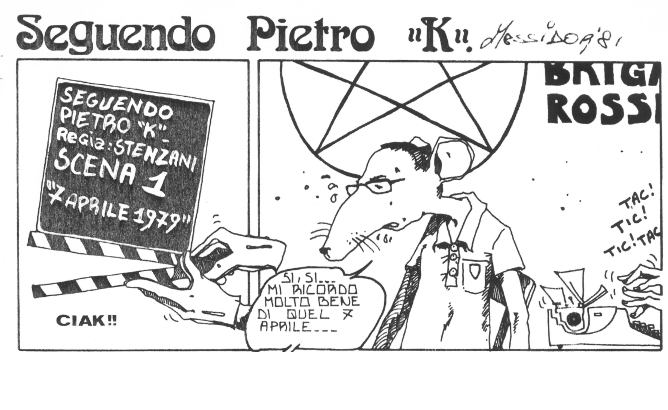
Following Pietro “K”.
We are publishing this comic — written, scripted, and drawn by Andrea Nese, a student at the P. Selvatico Art Institute (Padua) and a defendant in the Veneto branch of the April 7th case.
The comic was produced in 250 copies by the Rovigo April 7th Committee in August 1981, with the aim of raising funds to cover legal expenses and, at the same time, to ridicule the Calogero theorem and the procedural distortions carried out during the fast‑track trial (1980) against about thirty comrades by Judge Graziana Campanato.
The scans are by Giuseppe (Beppi) Zambon. (in Italian)
Drops of Memory.
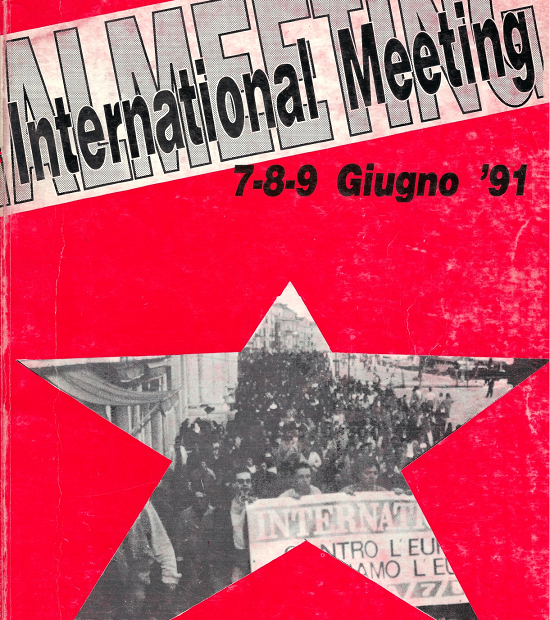
International Meeting – Venice, 7–8–9 June 1991
International conference organized by the National Anti‑Nuclear Anti‑Imperialist Coordination. It marked the first moment of discussion on the new world order and on Europe ’92.
The video, produced by Videazione in cooperation with Cayennoutogestita and Radio Sherwood, presents the results of the work carried out by the participating commissions.
The conference proceedings can be consulted at the Open Memory archive, Vicolo Pontecorvo 1A, Padua.
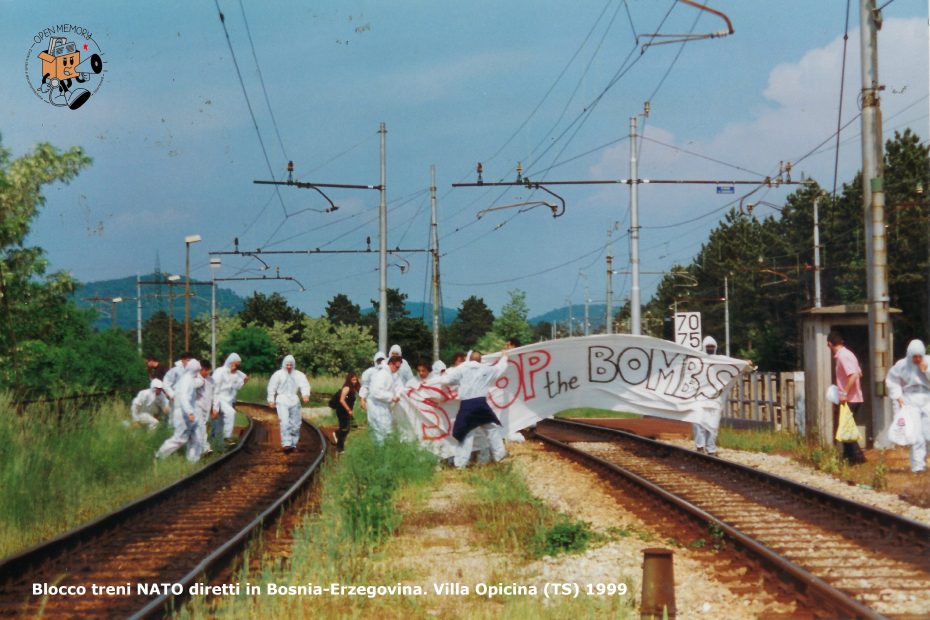
Spring 1999: STOP THE BOMBS, blockade of NATO trains headed to Bosnia and Herzegovina in Villa Opicina (Trieste).
Spring 2003: STOP GLOBAL WAR, demonstration against the war in Iraq.
Today, May 19, 2021, I begin to write. Once again, during the sleepless hours of last night, I felt the urge to start writing about my life. The fear that my memory, already diminished, might no longer support me in remembering; the fear of having lost my command of Italian, which flowed so easily forty years ago, before colliding with the obstacles of new languages. What also held me back was the sheer quantity of experiences, sensations, adventures to recount… (in Italian)
Drops of Memory.
Women’s struggles ran through the entire decade of the 1970s and beyond.
We are publishing in full the Women’s Bulletin of March 1974, produced by the Veneto Committee for Wages for Housework.
The document not only demands that the State provide a wage for domestic work carried out by women without pay, but also highlights several moments of struggle in the Veneto region.
For example, the struggles of the cleaning workers at the Faculty of Urban Planning in Venice, who fought for better working conditions and higher wages; or those of high‑school students campaigning for the abolition of the compulsory black apron.
And again, the struggles of university students living in Colleges and Student Housing who, unlike their male counterparts, were required to clean their rooms without compensation (in Italian).
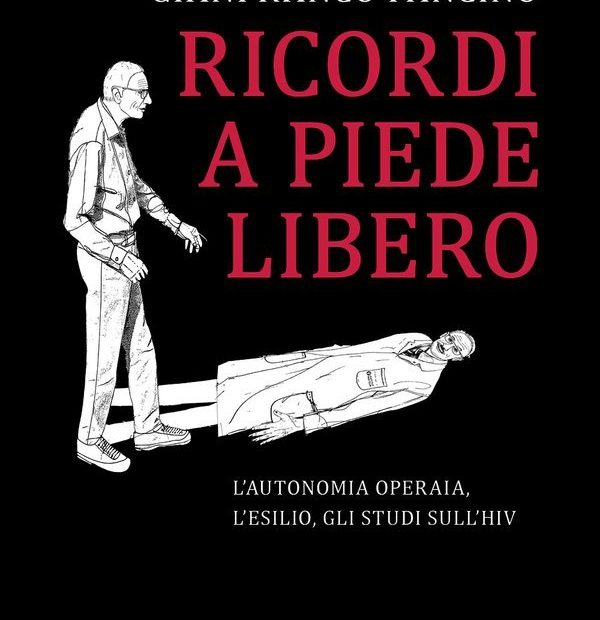
Gianfranco Pancino moves through three lives which, in his account, become a single trajectory: political militancy during the years of workers’ struggles and Autonomia, exile — experienced as a painful fracture but also as an opening toward other cultures and perspectives — and finally scientific research, leading to his involvement in HIV/AIDS studies and global health issues. A path marked by a constant demand for justice and a stubborn love for knowledge, which also returns in his reflections on the non-neutrality of science, on the limits of “democratic medicine” revealed during the pandemic, and on the need to root new practices of conflict and care in the territory, such as popular clinics
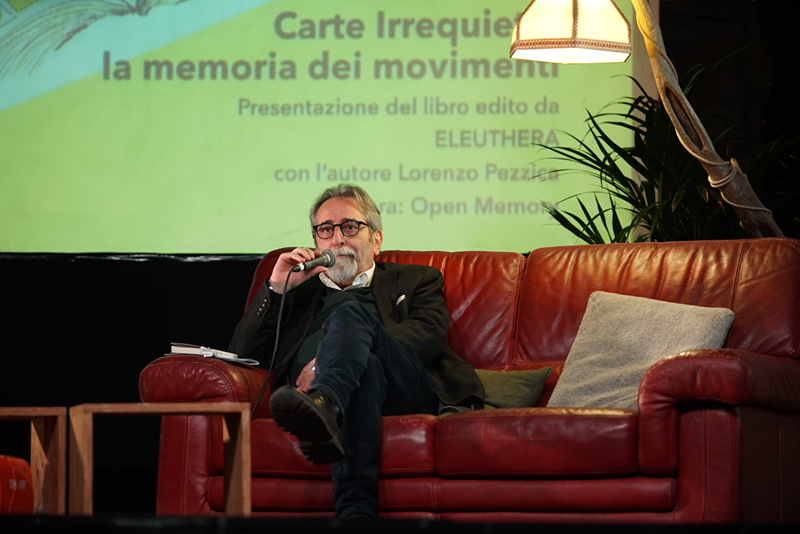
“Carte irrequiete: La Memoria dei Movimenti” is the volume that opened the publishing program of the sixth edition of Sherbooks. Published in October 2025 by Elèuthera, the book was born from the four‑handed writing of archivists Federico Valacchi and Lorenzo Pezzica.
Death in prison represents one of the most persistent and painful issues within our penitentiary system. It is a matter that, with unsettling regularity, returns to the center of public debate, as if time had brought no progress at all. For decades we have found ourselves discussing it, witnessing a long history of repeated denunciations and a lack of solutions.
Our Constitution, in Article 27, establishes fundamental principles that should guide the entire penal system. First, the accused is not considered guilty until a final conviction is issued: this is the principle of the presumption of innocence, which requires respect for the dignity of anyone subjected to criminal proceedings. Second, the Constitution states that punishments may not consist of treatments contrary to human dignity and must aim at the rehabilitation of the convicted person.
Despite these principles, everyday practice shows that constitutional declarations remain unheard. The news that regularly emerges from Italian prisons confirms this: inhumane conditions, serious incidents, and a constant violation of detainees’ fundamental rights.
To further illustrate this sad continuity, we publish here a bulletin from 1986 which—if any further proof were needed—shows that in forty years nothing has changed. The document stands as tangible evidence of a situation frozen in time, where hopes for change repeatedly shatter against the reality of the facts. (in Italian)
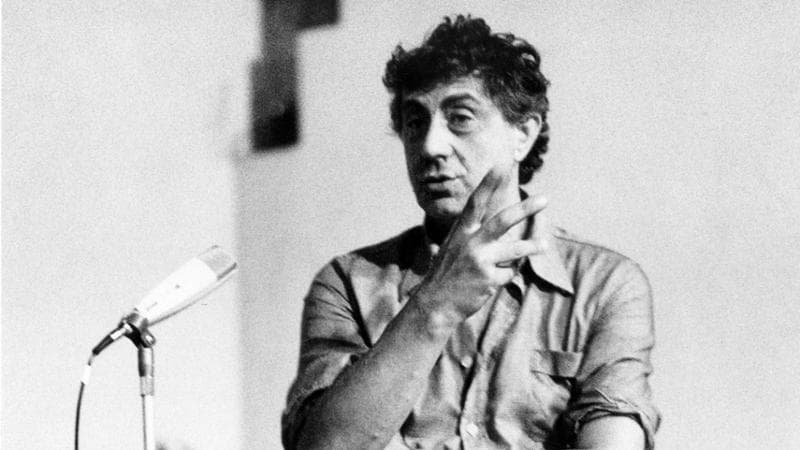
We publish the transcript of the lecture‑debate given by Franco Basaglia, universally known for Law 180/1978, in Padua in April 1971, as part of a seminar organized by the Collective of the Humanities Faculties.
The text, self‑printed by the Collective in November 1972, can also be consulted in the OpenMemory archive ( https://www.openmemory.it/archive ): Documents section, Diego Peroni Collection, Series …, Box 4, Folder … (in Italian)
ZeroNetwork – for autonomy in the network issue 01 June 1992 Newspaper within the ECN (European Counter Network) telematic network. “Everything reported here is the result of the circulation of ideas as well as of information within the ECN telematic network… Let us work together to build, through open communication, strong practices of identity.” (in Italian)
POTERE OPERARIO, issue 17, year 1970. (When we too emigrated out of hunger). In 25 years the bosses and governments have sent 6,000,000 proletarians out of Italy. We were housed in the “camps” and shacks across all of Europe, our labor was commanded in every language; the French, Germans, and Swiss exploited us… (in Italian)